The Search Bar Isn’t Dead — But It’s Not Alone Anymore
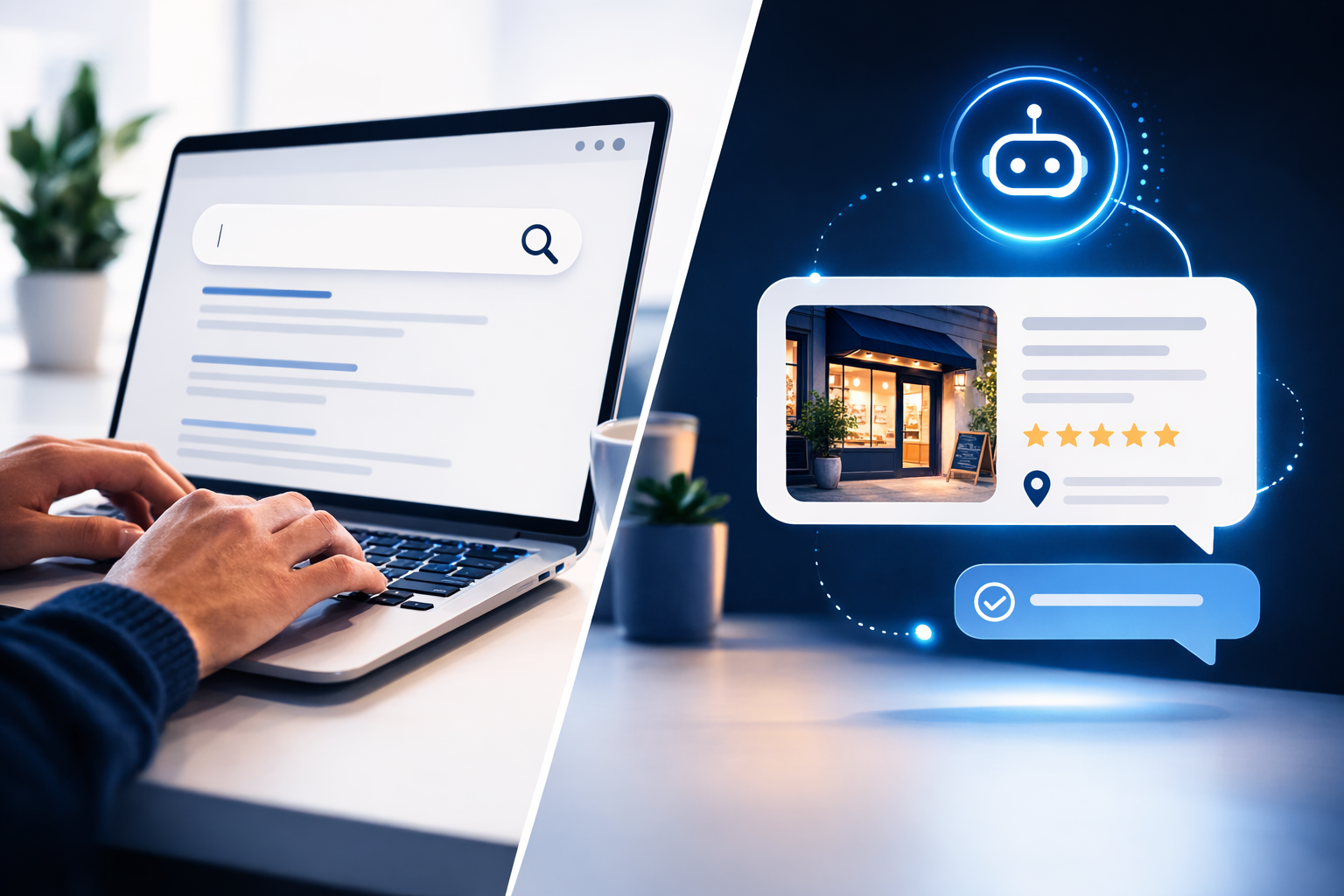
A few years ago, the goal was simple: show up on Page 1 of Google. You built a website, did some SEO, maybe ran some ads, and if someone in Enterprise or Dothan searched for what you offer, they’d find you. That’s still true. But it’s no longer the whole picture.
More and more, people aren’t starting their search with a Google search. They’re asking AI. They’re typing questions into ChatGPT, using Google’s AI Overview feature, or letting tools like Perplexity pull together a recommendation before they ever click a single link. In many cases, by the time someone lands on a business’s website, the AI has already told them who to trust.
If your business isn’t showing up in those AI-generated answers, you’re not losing ground to a competitor who outranked you. You’re just not in the conversation at all.
This matters everywhere, but it matters especially in the Enterprise and Dothan market. Fort Novosel’s PCS rotation brings thousands of new military families to the area every year. These are people who don’t have a go-to dentist, mechanic, or restaurant yet. They’re starting from scratch, and increasingly, they’re asking AI to help them figure out who’s worth trusting in a town they’ve never lived in. Whether your business shows up in those answers — or doesn’t — is becoming one of the most important visibility questions a local business owner can ask.
What AI Actually Does When Someone Asks a Question
When someone asks ChatGPT “who’s the best HVAC company in Enterprise, Alabama,” the AI doesn’t search Google the way you would. It pulls from a combination of sources: websites it has already indexed, reviews, local directories, published content, and the language patterns it has learned from across the web.
It’s looking for a few things:
• Is this business clearly described online? Does the website, the Google Business Profile, and third-party listings all say the same thing about what this business does and where it operates?
• Is there consistent positive sentiment? AI tools aggregate reviews, forum mentions, and social signals to form a picture of whether people trust a business.
• Is the information structured and readable? Websites that clearly spell out services, location, hours, and FAQs give AI the raw material it needs to reference you confidently.
A business that checks those boxes gets recommended. One that doesn’t gets skipped — even if it’s the best option in town.
What “AI-Ready” Actually Means for a Local Business
You don’t need to become a tech company. AI-readiness for a local business comes down to a handful of concrete things that most businesses either haven’t done or haven’t done consistently.
Your website says exactly what you do and who you serve
This sounds obvious, but most local business websites are vague in the ways that matter most to AI. They say “we offer quality service” instead of “we provide residential HVAC installation and repair in Enterprise, Daleville, and Ozark.” The more specific and geographic your language, the better your odds of being pulled into a relevant AI response.
Your Google Business Profile is complete and active
Google’s AI Overview — the summary answer that now appears at the top of many search results — draws heavily from Google Business Profiles. A complete profile with accurate categories, a thorough business description, current photos, and regular posts gives Google more to work with. An incomplete or neglected profile is essentially telling Google’s AI you’re not worth surfacing.
Your reviews are recent and your responses are professional
AI tools scan review sentiment as a trust signal. A business with 40 recent reviews averaging 4.6 stars reads very differently to an AI than one with 9 reviews from three years ago. This is the same argument for active review management we’ve covered before — except now the stakes include not just human readers, but the AI tools making recommendations before those humans even start looking.
You’re mentioned in places other than your own website
AI doesn’t just look at what you say about yourself. It looks at what the rest of the web says about you. Consistent listings in local directories, mentions in community publications, and a presence in the places where your market actually gathers all add up to a broader digital footprint that AI can cross-reference. The more places your business name, address, and services appear consistently, the more credible you appear to the tools doing the recommending.
The Traffic Shift Worth Paying Attention To
Many business owners have noticed that website traffic looks a little different than it did two or three years ago. Total visits may be down, but the quality of the visitors who do show up tends to be higher. They already know what they want. They’re closer to a decision.
That’s the AI effect in action. The people who find you through an AI recommendation have already been pre-qualified. The AI told them you were the right fit. When they click through to your website, they aren’t browsing. They’re deciding.
That’s a good thing — but only if you’re the business getting recommended in the first place.
This Isn’t About Replacing What’s Working
Traditional SEO, Google Business Profile management, and review generation aren’t going away. They’re the foundation. AI-readiness is what you build on top of that foundation once the basics are solid.
The businesses that will win the next few years of local search aren’t the ones chasing every new tool. They’re the ones who have the fundamentals locked in — accurate information everywhere it needs to be, consistent reviews, a website that clearly communicates value — and then layer in the newer signals that AI tools are learning to trust.
The window to get ahead of this is open right now, because most local businesses haven’t thought about it yet. That gap closes fast once it becomes common knowledge.
The Bottom Line
The way people find local businesses is changing. It’s not a dramatic break from the past — it’s an extension of it. Google still matters. Reviews still matter. Your website still matters. But the bar for what “good enough” looks like has moved, and it’s being evaluated now by both humans and the AI tools they’re increasingly relying on to make decisions for them.
The businesses in Enterprise and Dothan that get this right early won’t just rank higher. They’ll be the ones AI recommends to every new family that rolls into town looking for someone they can trust.
If you’re not sure where your business stands — how you appear across search, AI tools, and local directories — that’s exactly the kind of audit we do for local businesses in the area. Get your audit here.
Enterprise Living works with business owners in the Enterprise and Dothan market to build the kind of online presence that gets found, regardless of how someone is doing the looking.