Why Your 'Digital Storefront' is Just as Important as Your Physical One
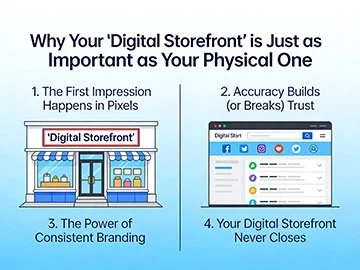
In the past, a business's success was often measured by "curb appeal." A clean window display, a prominent sign, and a welcoming entrance were the primary ways to entice foot traffic. While those physical elements still matter, the game has changed. Today, the vast majority of your customers will visit you digitally long before they ever step through your front door.
Your digital storefront—the sum of your website, social media profiles, and search engine listings—is now the primary gateway to your brand. Here’s why treating your online presence with the same care as your physical shop is no longer optional.
1. The First Impression Happens in Pixels
Think of your website as your virtual lobby. If a customer walked into your physical store and found peeling paint, dim lighting, and confusing signage, they’d likely turn around and leave. The same logic applies to your website.
A professional, modern website signals credibility. It tells the customer that you are active, legitimate, and detail-oriented. Conversely, a broken layout or an outdated design can lead a potential client to wonder if you’ve gone out of business or if you simply don’t care about the quality of your work.
2. Accuracy Builds (or Breaks) Trust
There is nothing more frustrating for a customer than checking Google for a business’s hours, driving across town, and finding a "Closed" sign on the door.
Accuracy in your digital storefront—specifically regarding your hours, location, and contact information—is a fundamental pillar of customer service.
Google Business Profile: Keep this updated religiously, especially during holidays or seasonal shifts.
Direct Links: Ensure your "Get Directions" links actually point to your current front door.
Contact Friction: If your phone number is wrong online, you aren't just losing a call; you're creating a "negative brand experience" before the relationship has even begun.
3. The Power of Consistent Branding
Consistency is the "secret sauce" of professional branding. When your physical store uses a specific color palette and tone of voice, but your Instagram looks like it belongs to a different company, it creates "cognitive dissonance" for the consumer.
Consistent branding across all digital platforms (Facebook, LinkedIn, your website, and Yelp) ensures that your business is:
Memorable: Customers need to see a brand multiple times before it sticks.
Reliable: Consistency suggests that you have systems in place and a clear vision.
Searchable: Unified naming conventions and keywords help search engines understand exactly who you are, making it easier for new customers to find you.
4. Your Digital Storefront Never Closes
Your physical location might run on a 9-to-5 schedule, but your digital storefront is working for you 24/7. While you’re asleep, a potential customer might be browsing your services, reading your "About Us" page, or checking your reviews.
By maintaining a professional online presence, you are essentially hiring a salesperson who works for free, around the clock, across the entire world.
Your physical and digital storefronts are two sides of the same coin. A beautiful physical space gets people to stay, but a professional digital presence gets them to show up in the first place.
If it’s been a while since you "walked through" your own digital front door, take a moment to look at your business through a customer's eyes. Is the information correct? Does the design reflect your quality? If the answer is no, it's time to do some digital housekeeping.